







 Publish to Newswire
 Add an Event
Feature Archives
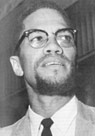
Today, on what would have been the 78th birthday of El Hajj Malik El Shabazz, a.k.a. Malcolm X, the issues facing not only African-American communities, but poor and working class peoples of all colors around the world, have not decreased in severity. Today is a day without much fanfare in the corporate media, however, a day without parades or ahistorical tributes on NPR or even the jingoistic Fox News. The central messages and themes are always distorted by a press bound by tight ideological blinders. Social justice never came without struggle. Malcolm X is one such freedom fighter who offers a measure of inspiration for those around the world that seek true social justice, not the kind co-opted and sold back as part of some marketing campaign.
May 19 is also Racial Justice Day, with demonstrators offering classes starting at city hall in SF, then on to the Israeli consulate and Oakland's police department. Photos: 1
Malcolm-X.org | Malcolm X & Hip Hop | Davey D
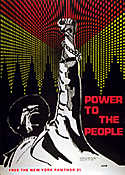
As founder of Chicago's chapter of the Black Panther Party (BPP) in 1968, Fred Hampton was a man of the people. He spearheaded setting up programs designed to educate and alleviate suffering in poor and working class black neighborhoods, which knew predominantly violence and repression. His charisma helped him persuade the city's most powerful street gangs to agree on a nonaggression pact, marking the original version of the "rainbow coalition." His ability to focus dissent and serve as inspiration for countless activists then and now was what led the Chicago police, assisted by Hampton's informant bodyguard and the FBI's COINTELPRO, to gun him and Mark Clark down as they slept. Ballistic evidence revealed that only one bullet had been fired by the Panthers whereas nearly a hundred came from police guns. December 4 is a day to remember all those that have struggled for social justice and true peace.
FBI.gov BPP FOIA documents | BPP Newspaper Collection | The Huey P. Newton Foundation | Black Panther Film Festival | More background
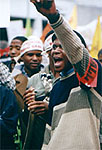
Oakland Update: A protest in solidarity with WCAR and an International Day of Action Against Racism was held in Oakland on Friday, as local democrats represent the Bush Administration in Durban. Pictures: 1 | 2 | 3

The international community has responded with outrage. "We are disappointed that the former colonial powers - and we should emphasize that some still are colonial powers - are so reluctant to acknowledge the indisputable facts of history and to come up with concrete solutions," said David Commissiong, a Barbadian official.
The United States Government has shown how its true colors by trying to run away from issues of institutionalized racism, racial profiling, criminal justice system racism and slavery reparations. While much momentum has been put into reparations talks and working groups for the conference, Secretary of State Colin Powell insists that these topics are not relevant to dialogue about racism. Powell insists that "it has nothing to do with the Administration being racist" in an interview with CNN.

Independent journalists have continued to struggle against governments, corporations and local police agencies which do not recognize them as legitimate reporters.
A person's chances of living in poverty are greatly determined by race. Statistics show that many seemingly race-neutral policies cause and perpetuate disproportionate poverty among people from marginalized racial, ethnic and other descent-based groups worldwide. These practices include employment discrimination and segregation, welfare "reforms" that generate competition for jobs and drive down wages, and globalization and international financial policy that make every job market an international one. These issues arise between and within countries and in every national election in the world.
Health
Historical and current racism and discrimination threaten the health of racial and ethnic minorities in the U.S. When they seek care or treatment, the clinical response is different for them, regardless of income, than for caucasions. As a result, they are more likely to suffere from chronic illness and are more likely to become severely ill.
In addition, the low income level of a disproportionate number of ethnic and racial minorities makes it difficult for them to gain access to adequate preventive care or diagnostic and treatment services. This is especially true for women, young people and children.
Education
Any dimension of public education -- funding, resources, curriculum, school discipline, or rates of graduation and college enrollment -- reveals vast differences between the experieces of marginalized racial, ethnic and other descent-based groups and those of their white counterparts. These are differences in educaiton quality and accessibilty, and indicate the widespread presence of institutional racism, which can only be dismantled with shifts in funding and national priorities.
 92
92