







 Publish to Newswire
 Add an Event
Feature Archives



Wed Dec 19 2012 (Updated 12/25/12)
Monterey, Fresno and San Benito Counties Slated for Hydraulic Fracking
On December 12th, dozens of protesters rallied outside a federal auction in Sacramento against plans to lease more than 17,000 acres of California public land to oil companies for drilling and fracking. Demonstrators fear that opening up thousands of acres of public land to oil and gas exploration would directly undercut the state's commitment to clean and renewable energy and endanger an already threatened water supply. Land spanning Monterey, San Benito and Fresno counties lies on what is known as the Monterey Shale, a formation of underground minerals. Oil and gas companies are targeting this expanse for hydraulic drilling.

Mon Nov 26 2012 (Updated 11/29/12)
LAFCO to Meet for Fourth Hearing Regarding UCSC Upper Campus Expansion
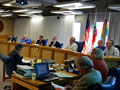
On Wednesday, December 5th, the Local Agency Formation Commission (LAFCO) will reconvene for what may be the final hearing concerning the request by UC Santa Cruz to extend the water service needed to develop 240 acres of Upper Campus natural habitat, which would require over 250 million additional gallons of water per year from the Santa Cruz water supply.



Sat Nov 24 2012 (Updated 01/06/15)
University of California Razes Publicly Planted Crops on Gill Tract
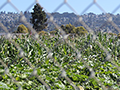
Occupy the Farm writes: "On Friday November 16, 2012, the University of California (UC) razed all of the publicly planted crops on the Gill Tract. Occupy the Farm is disappointed that the UC has unnecessarily destroyed the hard work of the community and food that could have fed it. The weekly distribution and harvest events could have continued that, over the course of the summer and early fall, have yielded over one ton of food from the crops planted during the occupation last Spring.
Mon Oct 22 2012 (Updated 10/25/12)
Desal Task Force: Current Cost Estimate for Proposed Plant in Santa Cruz is '$114 Million'
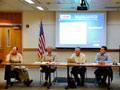
Program managers delivered a $114 million cost estimate for construction of the proposed desal plant to the members of the Desalination Task Force at their October 17 meeting in Santa Cruz. The $114 million figure is to be considered a range, representing a possible cost of between $97 million and $143 million for the plant, and it does not include the millions spent already during the early phase of planning and promotion of the proposed water project.

Tue Sep 4 2012 (Updated 09/06/12)
Anti-Monsanto Project to Shutdown Monsanto in Davis on September 17th
Six months ago, local Occupy movements arrived at one of Monsanto corporation's Davis facilities at 6 a.m. Monsanto sent a message to their plant's workers to not come into work. The protest educated the public and initiated a conversation as a general assembly brainstormed solutions to Monsanto's corrupt ties with the government, unethical business practices, destruction of the environment, as well as the production of unhealthy food. Local activist groups plan to shutdown the Davis Monsanto plant once again on Monday, September 17th.

Sat Sep 1 2012 (Updated 09/06/12)
Yes on Prop 37 March in Santa Cruz to Label Genetically Engineered Foods
On August 24, supporters of GMO-Free Santa Cruz and Proposition 37 on the California ballot, marched and sang along Pacific Avenue to raise awareness about the proposition, and encourage people to vote in favor of it. Throughout the United States, people currently eat genetically engineered food, but they generally are not aware of it. The California Right to Know Genetically Engineered Food Act, Prop 37 on the November ballot, would simply require food sold in retail outlets in California, such as grocery stores, to be labeled if it is produced with genetic engineering.

Joshua Hart reports: "If the California Coastal Commission’s August 10 decision is any indication, no endangered species, viewshed, or habitat is safe from a Distributed Antenna System (DAS) 4G cell tower popping up right next door. It’s open season, as smart phone addictions drive a kind of selective blindness toward wireless damage to life itself. Those groups who are meant to protect remaining wilderness areas have grown silent, awkward, in denial. We cannot count on the traditional defenders of nature to protect us from the threats of the 21st century."