







 Publish to Newswire
 Add an Event
From the Open-Publishing Calendar
From the Open-Publishing Newswire
Indybay Feature
The Myths of Biofuels
 Import event into your personal calendar
Date:
Thursday, January 24, 2008
Time:
7:00 PM
-
8:30 PM
Event Type:
Speaker
Organizer/Author:
Michael Levy
Email:
michael [at] lwgc.net
Phone:
427-9916
Location Details:
Louden Nelson Community Center, Rm. 3
301 Center St., Santa Cruz
301 Center St., Santa Cruz
* Can biofuels solve the climate crisis?
* Is ethanol production good or bad for the environment?
* What about cellulosic ethanol?
* Why did a UN official recently label iofuels production “a crime against humanity”? (Jean Ziegler, special rapporteur to the UN on the Right to Food)
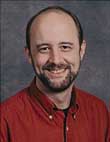
David Fridley, of the Environmental Energy Technologies Division of Lawrence Berkeley Labs, will address these questions in his talk “The Myths of Biofuels” on Thursday, January 24, at Louden Nelson Center, Room 3, at 7 pm. The event is Free/Donation requested.
Fridley, whose work centers on end-user energy efficiency, spent many years in the oil industry and is an expert on energy issues in China. He helped to draft the Peak Oil resolution adopted by the City of San Francisco to prepare for the inevitable decline in oil resources.
Fridley’s talk presents a scientists’ point of view on the many claims currently being made about the role of biofuels, such as ethanol and biodiesel, in a sustainable energy future. Separating the hype from the facts, he will clarify the many issues about biofuels in language clearly accessible to a general audience.
While not denying that there may be some useful small-scale applications for biofuels, Fridley makes clear that biofuels are no replacement for our rapidly depleting fossil fuels. “The amount of energy that we consume in fossil fuels every year exceeds the amount of energy that is captured from the sun in every plant in America, including the roots,” he says.
He also makes clear the humanitarian impact of a biofuels-based future: “There is simply no way to achieve [the current target] levels of biodiesel blend…if we don’t want people to starve….Why we have chosen to take the fundamental of human life [i.e. food] and link it to the price of a nonrenewable resource [i.e. oil], is an irrationality I don’t understand.”
His presentation will be followed by “A Local Plan for Energy Independence” presented by transportation expert Micah Posner and NASA researcher and solar advocate Joe Jordan. According to Posner, “ There’s no reason to convert an oil addiction into a biofuels addiction. Energy independence starts with walking to the store.”
* Is ethanol production good or bad for the environment?
* What about cellulosic ethanol?
* Why did a UN official recently label iofuels production “a crime against humanity”? (Jean Ziegler, special rapporteur to the UN on the Right to Food)
David Fridley, of the Environmental Energy Technologies Division of Lawrence Berkeley Labs, will address these questions in his talk “The Myths of Biofuels” on Thursday, January 24, at Louden Nelson Center, Room 3, at 7 pm. The event is Free/Donation requested.
Fridley, whose work centers on end-user energy efficiency, spent many years in the oil industry and is an expert on energy issues in China. He helped to draft the Peak Oil resolution adopted by the City of San Francisco to prepare for the inevitable decline in oil resources.
Fridley’s talk presents a scientists’ point of view on the many claims currently being made about the role of biofuels, such as ethanol and biodiesel, in a sustainable energy future. Separating the hype from the facts, he will clarify the many issues about biofuels in language clearly accessible to a general audience.
While not denying that there may be some useful small-scale applications for biofuels, Fridley makes clear that biofuels are no replacement for our rapidly depleting fossil fuels. “The amount of energy that we consume in fossil fuels every year exceeds the amount of energy that is captured from the sun in every plant in America, including the roots,” he says.
He also makes clear the humanitarian impact of a biofuels-based future: “There is simply no way to achieve [the current target] levels of biodiesel blend…if we don’t want people to starve….Why we have chosen to take the fundamental of human life [i.e. food] and link it to the price of a nonrenewable resource [i.e. oil], is an irrationality I don’t understand.”
His presentation will be followed by “A Local Plan for Energy Independence” presented by transportation expert Micah Posner and NASA researcher and solar advocate Joe Jordan. According to Posner, “ There’s no reason to convert an oil addiction into a biofuels addiction. Energy independence starts with walking to the store.”
For more information:
http://peoplepowersc.org
Added to the calendar on Mon, Dec 17, 2007 5:56PM
Add Your Comments
Latest Comments
Listed below are the latest comments about this post.
These comments are submitted anonymously by website visitors.
TITLE
AUTHOR
DATE
The Myths of Biofuels (2007)
Sat, Jan 26, 2008 11:11AM
David Fridley, ex-Chevron employee, says "biofuels are bad"
Thu, Jan 24, 2008 4:16PM
David Fridley and “The Myths of Biofuels”
Mon, Jan 21, 2008 10:57AM
We are 100% volunteer and depend on your participation to sustain our efforts!
Donate

$210.00 donated
in the past month
Get Involved
If you'd like to help with maintaining or developing the website, contact us.
Publish
Publish your stories and upcoming events on Indybay.
Topics
More
Search Indybay's Archives
Advanced Search
►
▼
IMC Network