







 Publish to Newswire
 Add an Event
Feature Archives
Fri Jan 12 2007 (Updated 01/14/07)
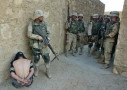
Bush Increases US Troop Levels In Iraq
On Wednesday, January 10,
George Bush gave a "major policy address" announcing an increase in US troop levels in Iraq.
He said he "took responsibility" for past mistakes but that more troops are needed to pacify Baghdad and other parts of the country. The President also threatened military action against Iran and Syria.
The first wave of additional troops has already begun deploying to the region, and a total of six brigades will be ordered all together, five into the city of Baghdad and one into Anbar Province, center of the Sunni insurgency against the US occupation. Bush has also sent an additional aircraft carrier task force into the Persian Gulf.

Fri Dec 29 2006 (Updated 01/02/07)
Saddam Hussein Executed
On December 30th, 2006, former Iraqi president Saddam Hussein was executed by hanging.
Saudi Arabia criticised Iraq's Shi'ite leaders for executing former Iraqi leader during the Eid al-Adha religious feast.
Human Rights Watch came out against the execution stating that the execution "following a deeply flawed trial for crimes against humanity marks a significant step away from respect for human rights and the rule of law in Iraq"
Before the Iraqi invasion of Kuwait in 1990, Saddam Hussein was a US ally against Iran.
In the 1980s, the Reagan administration covertly provided critical battle planning assistance to Hussein at a time when American intelligence knew that Iraqi commanders would employ chemical weapons in waging the decisive battles of the Iran-Iraq war.
Tue Dec 26 2006
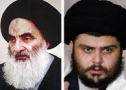
Sistani Rejects New Sunni-Shiite Coalition
On December 23rd, Grand Ayatollah Ali Sistani rejected a US backed plan for a new coalition in the Iraqi parliament that would have allied the Shiite Supreme Council for Islamic Revolution in Iraq with the Sunni Arab Iraqi Islamic Party and the Kurdistan Alliance. The plan aimed at isolating the 32 Sadrist members of parliament and depriving them of the ability to bring down the prime minister.
On December 25th, British troops raided the headquarters of an Iraqi police unit in Basra, claiming they heard that the unit was infiltrated by Shiite militiamen and planning to kill their prisoners.
Basra City Council withdrew co-operation from UK forces in southern Iraq to protest the raid.
The US military has also conducted raids against the Badr Corps militia of the Shiite Supreme Council for Islamic Revolution in Iraq, in the course of which it arrested four Iranian officials. It had to let two of them go when it transpired that they were diplomats invited into Iraq by President Jalal Talabani, a close US ally.
Sun Nov 26 2006 (Updated 11/27/06)
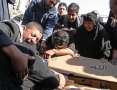
More than 200 dead in Baghdad’s deadliest day of bombings
On November 23rd, sectarian warfare in Iraq escalated after more than 200 people died and at least 250 were wounded in Baghdad, in the deadliest single day of attacks since the US invasion in 2003.

Thu Oct 12 2006 (Updated 10/16/06)
655,000 Iraqis Killed Since US Invasion, Majority In This Past Year
A Johns Hopkins study published in UK journal The Lancet estimates that 655,000 more Iraqis have died as a result of war and political violence since March 2003 than would have died if mortality rates had remained the same as during 2002. Both violent and nonviolent death rates are now significantly above pre-war values, with the violence mainly concentrated in Sunni areas. While the number of additional deaths in the first year after the war was likely over 100,000, over half the total additional deaths are from this past year alone.
PDF of Johns Hopkins study

Fri Aug 18 2006 (Updated 08/21/06)
August 19th Vigils Remember Abeer Hamza
On Saturday, August 19th, which would have been Abeer Hamza's 15th birthday, candlelight vigils were held in several cities. Abeer Hamza was the young Iraqi woman who was raped and killed, along with her family, in March of this year by US occupation forces. The vigils in for Berkeley, New York, and Los Angeles were organized by a group of 8 young women who were outraged by the story of what happened to the Hamza family. In Berkeley, people gathered for a vigil at Willard Park from 7:30 to 9:30pm.
Photos

Sat Jul 22 2006 (Updated 08/19/06)
Iraq Shows Rare Unity Against Israel's Destruction Of Lebanon
Grand Ayatollah Sistani has spoken out against Israeli agression. Juan Cole writes that Sistani is extremely anxious that the Lebanon war will send Shiite Iraq spinning out of control and lead to a major confrontation between Iraqi Shiites and the US and British troops
Previous Statement By Sistani On the US and the Palestinians
On July 16th, Shi'ites, Sunnis and Kurds in Iraq's U.S.-backed parliament stood united in their condemnation of Israel's destruction of Lebanon. President of the Iraqi National Assembly Mahmoud al-Mashhadani spoke out against the US at a UN-sponsored conference on transitional justice and reconciliation in Baghdad on July 22nd. In addition to denouncing US backed attacks on Lebanon he states "Just get your hands off Iraq and the Iraqi people and Muslim countries, and everything will be all right,...What has been done in Iraq is a kind of butchery of the Iraqi people." Iraqi Shiite cleric Muqtada al-Sadr is urging Sunnis and Shiites to unite so that Muslims can defeat Israel.
Prime Minister Nouri al-Maliki visited the US on July 26th and addressed Congress. Sadr as well as the Fadhila party, which is part of al-Maliki's Shiite alliance, had urged him to cancel his visit in protest over US support for the attacks on Lebanon. “Fadhila demands that the prime minister cancel his visit to the U.S. in solidarity with the Lebanese people and over what is going on there, the disasters due to the Zionist aggression amid international silence about these crimes,” party official Sheik Sabah al-Saiedi told The Associated Press.
Iraqi Shi'ite militia ready to join fight in Lebanon | Pelosi Attacks Iraq's Prime Minister | Howard Dean calls Iraqi PM an 'anti-Semite' for not supporting Israel | Congress Expects Islamic Dawa to Support Israel, Condemn Hizbullah | A Family in Baghdad: sadness, for what is happening to Iraq, Palestine, and Lebanon | Tell Me a Secret: Lebanon..
Turkey is explicitly citing Israel's unrestrained move into Lebanon as a precedent to move into Kurdistan. Turkey's Hezbollah is the Kurdish Workers Party (PPK) and Turkish forces have had running gun battles with their long-time foe in recent weeks.
On July 16th, Shi'ites, Sunnis and Kurds in Iraq's U.S.-backed parliament stood united in their condemnation of Israel's destruction of Lebanon. President of the Iraqi National Assembly Mahmoud al-Mashhadani spoke out against the US at a UN-sponsored conference on transitional justice and reconciliation in Baghdad on July 22nd. In addition to denouncing US backed attacks on Lebanon he states "Just get your hands off Iraq and the Iraqi people and Muslim countries, and everything will be all right,...What has been done in Iraq is a kind of butchery of the Iraqi people." Iraqi Shiite cleric Muqtada al-Sadr is urging Sunnis and Shiites to unite so that Muslims can defeat Israel.
Prime Minister Nouri al-Maliki visited the US on July 26th and addressed Congress. Sadr as well as the Fadhila party, which is part of al-Maliki's Shiite alliance, had urged him to cancel his visit in protest over US support for the attacks on Lebanon. “Fadhila demands that the prime minister cancel his visit to the U.S. in solidarity with the Lebanese people and over what is going on there, the disasters due to the Zionist aggression amid international silence about these crimes,” party official Sheik Sabah al-Saiedi told The Associated Press.
Iraqi Shi'ite militia ready to join fight in Lebanon | Pelosi Attacks Iraq's Prime Minister | Howard Dean calls Iraqi PM an 'anti-Semite' for not supporting Israel | Congress Expects Islamic Dawa to Support Israel, Condemn Hizbullah | A Family in Baghdad: sadness, for what is happening to Iraq, Palestine, and Lebanon | Tell Me a Secret: Lebanon..
Turkey is explicitly citing Israel's unrestrained move into Lebanon as a precedent to move into Kurdistan. Turkey's Hezbollah is the Kurdish Workers Party (PPK) and Turkish forces have had running gun battles with their long-time foe in recent weeks.
Iraq:
 4
4

4