







 Publish to Newswire
 Add an Event
Feature Archives


Wed Jul 28 2021 (Updated 08/18/21)
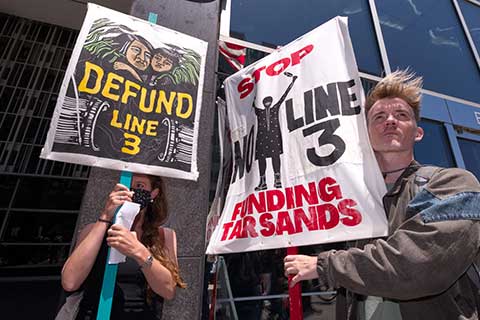
Bay Area Organizing to Stop Line 3
Line 3 is a tar sands oil pipeline that violates the treaty rights of Minnesota tribes. On July 16, five activists were cited at a demonstration at the federal building in San Francisco that was organized to draw attention to President Biden's inaction on the issue. The Line 3 pipeline is a project of Canadian fossil fuel company Enbridge, to increase their exports of tar sands oil. Climate and Indigenous rights activists in the Bay Area again stood up to stop the construction of Line 3 in solidarity with a National Day of Action on August 13.

Tue Jul 27 2021 (Updated 09/22/21)
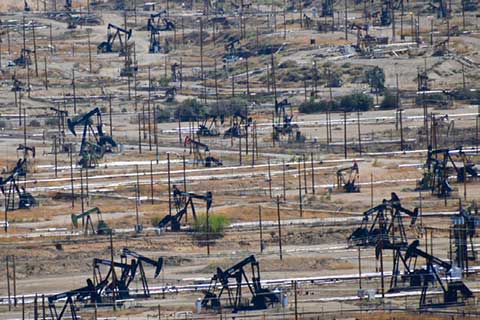
California Oil Among the Most Climate-Damaging on Earth
Oil produced in California is among the most climate-damaging on the planet and is getting worse, according to a new report released by the Center for Biological Diversity. 'Killer Crude: How California Produces Some of the Dirtiest, Most Dangerous Oil in the World' finds that California oil emits more carbon dioxide per barrel than the rest of the global supply refined in the state. It’s now even more climate-heating than Canadian tar sands oil refined in California. The report comes as record heat and drought bake the West.

Tue Jul 27 2021 (Updated 07/31/21)
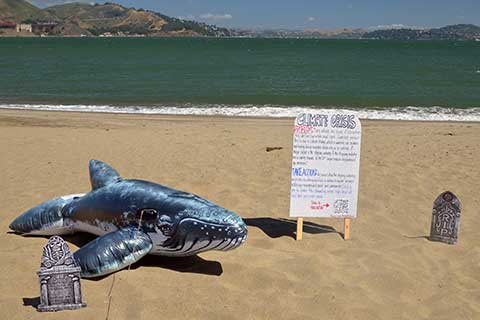
"A Wake for the Whales" Marks Bay Area Deaths, Calls for Protections
Conservation groups and whale lovers gathered on June 8, World Oceans Day, at Crissy Field Beach in San Francisco to honor the 12 dead whales that have washed up in the Bay Area this year and to call for greater protections. Attendees called for solutions to the three top threats to whales: ship strikes, entanglement in fishing gear and climate change. Against the backdrop of the Golden Gate, speakers at the event called for a mandatory 10-knot speed limits for ships passing through whale habitat along California’s coast.
Tue Jul 27 2021
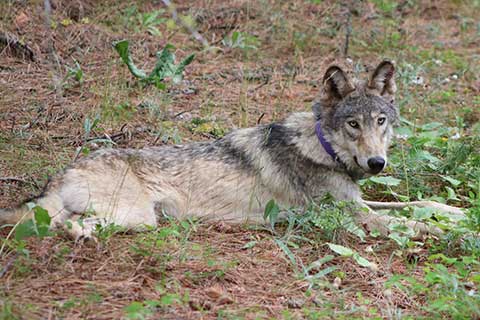
New Wolf Pack Confirmed in California’s Plumas County
The California Department of Fish and Wildlife reported on June 23 that a new wolf pack has established itself in southern Plumas County. Named the Beckwourth pack, the group of three wolves was first confirmed in May but not officially announced. Photographs of the three wolves composing the Beckwourth pack were captured on a trail camera. A preliminary DNA analysis shows one wolf is LAS12F, a 2-year-old female wolf born into the Lassen Pack’s 2019 litter.

Tue Jul 27 2021 (Updated 07/29/21)
Mindful Intelligence: Alan Clements on his New Book and Film
Alan Clements has been on a quest for freedom that’s taken him to Myanmar, Yugoslavia, Australia, Bali, and even to Santa Cruz. He’s been a Buddhist monk, a performer, and an investigative journalist in areas of war and extreme conflict. Clements’ books, stage performances, and World Dharma meditation retreats have always grappled with the challenge of living open-hearted and authentic in a world of suffering and violence. His latest book — Extinction X-Rated — is part autobiography and partly a “dark satire about good and evil.”

Wed Jan 27 2021 (Updated 01/31/21)
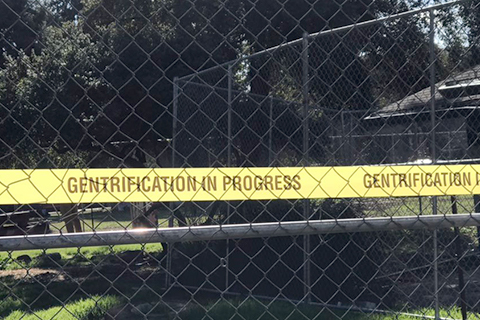
People's Park in Berkeley Faces Greatest Danger Yet
For 50 years, UC administrators have schemed to take People's Park from those who turned a dirt lot into a public sanctuary. Now, UC Berkeley is on the verge of permanently destroying the park. It installed fencing around the park on January 19. On January 27, police and public works crews evicted several unhoused residents. But people are resisting the coming construction of a 16-story housing complex. At a rally to save the park on January 29, protesters tore down fencing and carried it to Sproul Hall on UCB campus.

Thu Oct 15 2020 (Updated 10/24/20)
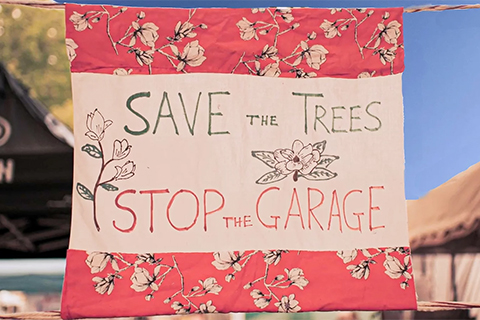
Library/Parking Garage Is Litmus Test for the Future of Santa Cruz
Erica Aitken of Reimagine Santa Cruz writes: The next City Council elections will decide the future of Santa Cruz. Do we open our doors to Silicon Valley with luxury rentals and our very own Santana Row? Or do we take control and build beautiful affordable housing for those who work and would like to live here? If we ask ourselves this question, it is because we have recently been the victims of a particularly galling breach of trust from our current City Councilmembers.